What Does a Control Arm Do on a Vehicle?
When we think about what makes a vehicle drive smoothly and safely, most of us picture the engine, brakes, or maybe the tires. But tucked away beneath the chassis is a lesser-known part quietly doing some heavy lifting: the control arm. It’s not flashy, but it’s essential. This small component plays a big role in how your vehicle steers, handles bumps, and stays stable on the road. Whether you’re a seasoned auto enthusiast or just someone who wants to understand what keeps your car running right, knowing how a control arm works can help you make smarter maintenance decisions. In this blog, we’ll break down what a vehicle control arm does, how to spot signs of wear, and why choosing the right replacement matters. Also, we’ll show you why JCBL India is the go-to name when it comes to high-quality, reliable control arms built for performance and safety.
What is a Vehicle Control Arm?
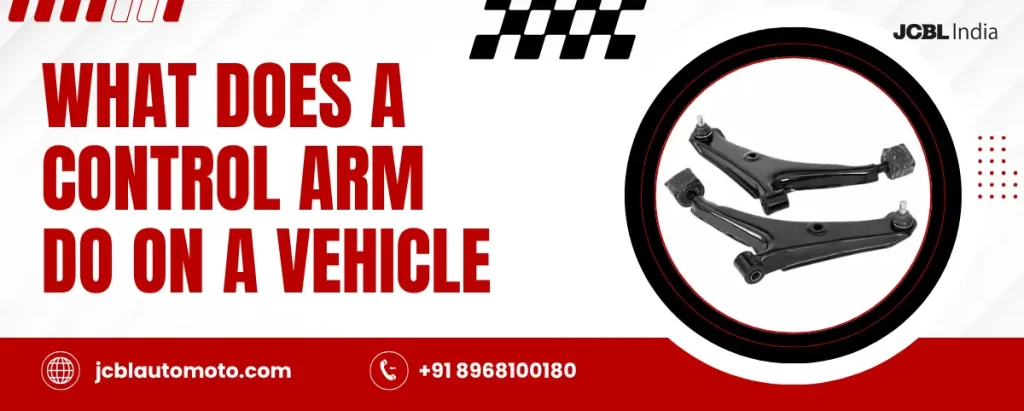
A vehicle control arm is a key part of the vehicle’s suspension system. It’s a hinged link that connects the wheel hub and steering knuckles to the car’s chassis. Most modern vehicles feature lower control arms, while some use both upper and lower control arms for added stability, especially in double-wishbone or multi-link suspension setups. Control arms are usually made of stamped steel, forged steel, or aluminum. They incorporate bushings on one end and a ball joint on the other. The bushings help absorb road vibrations and reduce noise, while the ball joint allows for flexible movement as the wheel moves up and down or turns left and right.
Main Function: Stability, Control & Smooth Ride
So, what does a control arm do? Let’s learn—
- Connects Suspension to the Vehicle Frame: Control arms form the structural link between the suspension system and the vehicle’s frame. They ensure that the wheels move up and down while remaining aligned with the car body.
- Maintains Proper Wheel Alignment: As the car moves, especially over uneven surfaces, the control arm ensures that the wheels stay aligned. This is critical not just for smooth driving but also for tire longevity and fuel efficiency.
- Supports Steering and Handling: Control arms work in tandem with the steering system. The attached ball joints allow pivoting movement, which translates to better responsiveness and precision while turning.
- Absorbs Road Shocks and Vibrations: Along with shocks and struts, control arms dampen the impact from potholes, bumps, and rough roads, ensuring a comfortable driving experience.
- Ensures Tire Contact with the Road: By keeping the wheels in position during up-and-down movement, control arms ensure consistent contact with the road surface, vital for braking and handling.
Signs Your Control Arm Needs Replacement
Since control arms bear a lot of mechanical stress, they’re prone to wear and tear over time. Recognizing the symptoms of a failing control arm can help avoid costly repairs and dangerous driving conditions. Here are some key warning signs to watch for:
Clunking or Popping Sounds
One of the most noticeable signs of a failing control arm is a clunking or popping sound, especially when driving over speed bumps or making sharp turns. These noises usually indicate that the bushings or ball joints within the control arm have worn out, allowing metal parts to knock against each other during movement.
Steering Wheel Vibration
If your steering wheel vibrates abnormally, especially when accelerating or at highway speeds, it may point to a loose or damaged control arm. This occurs because the faulty arm can’t stabilize the wheel properly, causing it to shake and transfer vibrations through the suspension and into the steering column.
Uneven Tire Wear
Worn or bent control arms can throw off your vehicle’s wheel alignment, leading to uneven tread wear on your tires. You may notice that one side of the tire wears down faster than the other. Ignoring this symptom not only affects vehicle handling but also increases long-term tire replacement costs.
Steering Pulls to One Side
If your car starts to pull or drift to one side while driving straight, it could be due to a failing control arm affecting suspension geometry. This misalignment puts uneven pressure on the wheels and can compromise steering precision, especially during braking or cornering.
Poor Handling and Braking
A damaged control arm can cause the suspension to lose its alignment, resulting in sluggish handling and increased stopping distances. You may feel reduced control when turning or braking, particularly on rough roads or during emergency maneuvers. This not only affects comfort but also poses serious safety risks.
Timely diagnosis and replacement of control arms are essential for safe, smooth, and controlled driving. Ignoring these symptoms can lead to further damage and increased repair costs.
Why Quality Control Arms Matter for Safety
When it comes to vehicle components, safety should never be compromised, and control arms are no exception.
- Crucial for Suspension Integrity: A low-quality or damaged control arm can compromise the entire suspension system, endangering passengers and impacting the vehicle’s performance.
- Impacts Braking and Emergency Maneuvers: Control arms play a role in maintaining contact between the tires and the road. During emergency stops or sharp turns, a weak control arm can lead to loss of traction.
- Protects Other Components: Faulty control arms can put undue stress on shocks, springs, bushings, and steering components, leading to a chain reaction of failures.
- Compliance with Safety Standards: High-quality control arms, like those manufactured by JCBL India, meet rigorous OEM and automotive safety standards, ensuring long-term reliability.
Choosing the Right Control Arm: Key Considerations
Before replacing a control arm, it’s essential to ensure the part matches your vehicle’s needs. Here’s what to keep in mind:
Vehicle Compatibility
It’s vital to select a control arm tailored to your vehicle’s specific make, model, and variant. An incompatible part can lead to poor fitment, misalignment, or even damage to your suspension system. Always verify compatibility with manufacturer data to ensure seamless integration and reliable on-road performance.
Material Quality
The durability of a control arm largely depends on the material used. High-grade materials like forged steel or aircraft-grade aluminum offer excellent strength, resistance to corrosion, and the ability to withstand constant stress. Inferior materials may bend, crack, or corrode over time, leading to premature failure and safety hazards.
OEM Standards and Certifications
Control arms should meet or exceed Original Equipment Manufacturer (OEM) standards to ensure safety, reliability, and optimal performance. Look for components that are tested and certified under recognized quality systems like ISO. JCBL India rigorously tests its parts to comply with international quality benchmarks.
Integrated Bushings and Ball Joints
Opting for vehicle control arms that come with pre-installed bushings and ball joints simplifies the replacement process. This integrated design reduces labor time, ensures correct part alignment, and minimizes installation errors. It also helps ensure consistent performance, as all parts are engineered to work together right out of the box.
Warranty and Support
A manufacturer’s warranty reflects confidence in the product’s quality. Always choose brands like JCBL India that offer solid warranty terms and responsive after-sales support. This ensures you’re protected against manufacturing defects, giving you peace of mind and reducing long-term maintenance or replacement costs.
Why JCBL India is Your Go-To Source for Control Arms
At JCBL India, we don’t just supply parts; we deliver confidence, safety, and performance. As a leading manufacturer and supplier of automotive replacement components, we are committed to offering high-performance control arms that meet and exceed industry standards. Here’s why customers trust JCBL India for control arms:
- OEM-Grade Manufacturing: Our control arms are precision-engineered to OEM standards, ensuring flawless fit and compatibility across a wide range of vehicles.
- Tested for Indian Roads: We rigorously test our components under real-world Indian road conditions—from rugged terrains to urban traffic—to ensure optimal durability.
- Extensive Vehicle Compatibility: JCBL India provides control arms compatible with Tata, Mahindra, Hyundai, Maruti, and more. Whether you own a hatchback, sedan, or SUV, we’ve got you covered.
- High-Grade Materials: All JCBL control arms are crafted using premium materials, offering resistance to corrosion, wear, and extreme temperatures.
- Customer-Centric Support: Our expert team offers personalized assistance, quick turnaround, and post-sales service, making JCBL India a trusted partner in your vehicle’s performance journey.
Conclusion
Though often overlooked, the control arm plays a vital role in your vehicle’s suspension, directly impacting steering precision, ride comfort, and overall safety. A damaged or low-quality control arm can compromise the entire suspension system, leading to poor handling, uneven tire wear, and even dangerous driving conditions. That’s why choosing the right control arm isn’t just a mechanical decision—it’s a safety investment. At JCBL India, we understand the critical function of control arms and manufacture them to meet the highest OEM standards using top-grade materials. Whether you drive a Tata, Mahindra, Hyundai, or other major vehicle brand, our precision-engineered control arms and other car spare parts are tested for strength, durability, and reliability on Indian roads. Don’t settle for less when it comes to your suspension. Trust JCBL India for control arms that deliver performance, longevity, and peace of mind. Explore our product range today and drive with confidence every mile of the way.
For any questions or further information about JCBL India, please contact us at:
Phone: +91-8968100180, +91-8288076221
Email: sales@jcblautomoto.com
FAQs
How long does a control arm typically last?
Control arms generally last between 90,000 to 150,000 km, depending on driving habits and road conditions. Regular inspection is recommended during routine service.
Can I replace just the bushings or ball joints instead of the entire control arm?
Yes, but if the arm itself is damaged or the labor cost is high, replacing the entire assembly is often more economical and reliable.
Is it safe to drive with a damaged control arm?
No. A damaged control arm can cause unstable steering, reduced braking, and even suspension failure, making the vehicle unsafe to operate.
How much does a control arm replacement cost in India?
The cost varies by vehicle model and part quality, ranging from ₹1,500 to ₹8,000 or more. Opting for high-quality parts like JCBL India’s ensures value for money.
Do control arms affect alignment?
Absolutely. A worn or bent control arm can throw off the alignment, leading to uneven tire wear and poor handling.